
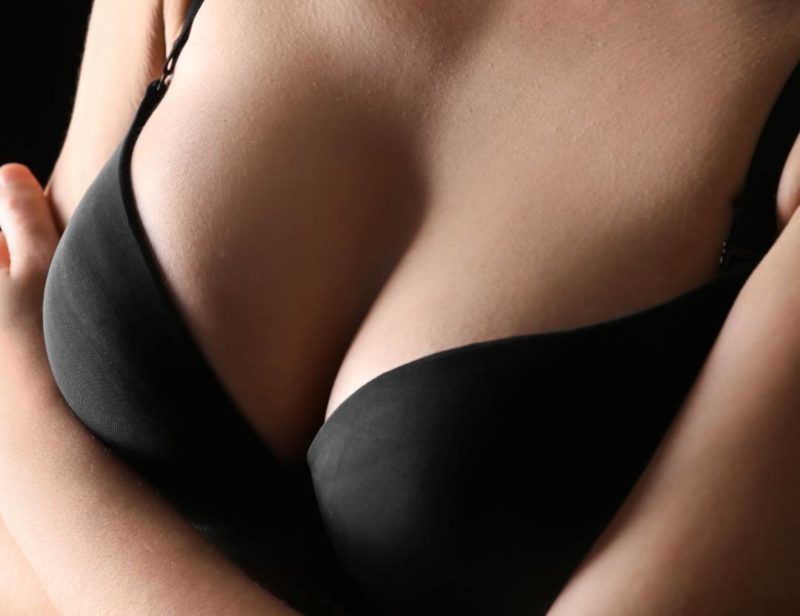
You’re not sure if you need a breast lift or augmentation? The decision is completely up to you. It depends on what your goals are and how important they are to you. Some women want to have perkier breasts in magazines, while others prefer their natural look and do not care about having bigger breasts. If it has been bothering you for a long time, the best thing for you would be to book an appointment with one of our doctors at Dr. Glasberg, M.D. We will discuss how to decide if you need a breast augmentation or breast lift.
Do you want to increase or decrease the overall size of your breasts? If so, then a breast lift may be more appropriate for you. This will reduce sagging and make them look fuller than they currently do. Breast augmentation would be better suited for someone who wants to maintain their current measurements but adds volume by getting a breast implant or using fillers like Juvederm.
Women over the age of 40 might need to have a breast lift more often than younger women. As we get older, gravity can take its toll on our breasts and cause them to sag a little bit as they lose their volume. Breast augmentation or lift could increase your self-confidence because you will be able to wear clothing without worrying about your breasts sagging.
The heavier you are, the more likely it is that your breasts will sag. Women who have a lot of fatty tissue in their breasts may want to consider getting a breast lift or augmentation because they will be fuller and perkier after surgery. Breast augmentation might work for someone with smaller breasts but wants them to look bigger on her frame.
Women over the age of 40 might need to have a breast lift more often than younger women. As we get older, gravity can take its toll on our breasts and cause them to sag a little bit as they lose their volume. Breast augmentation or lift could increase your self-confidence because you will be able to wear clothing without worrying about your breasts sagging.
Do you want to feel better about your breasts and have a boost in self-confidence when wearing clothing? If so, then it’s worth considering both options. A breast lift will reduce sagging, but breast augmentation can give you the size you’re looking for while maintaining some perkiness. Or maybe what motivates you more is that you don’t want to be self-conscious when walking around in a bikini. Breast augmentation might make more sense for this concern because they will look and feel fuller than what they do now.
Dr. Glasberg and his team are committed to providing you with the best possible results and look forward to scheduling your consultation and answering any questions you may have. To schedule an appointment, please call us at 212-717-8550 or use our easy online form.
Research indicates that tummy tucks are among the most common types of cosmetic surgeries women undergo. However, one of the most important details they leave out is the healing and the type of scar you will have afterward.
Since it is a surgical process, you should expect scarring after the tummy tuck procedure. However, the type and size of your scar will depend on where the surgeon made the incision and the technique they use. Some of the common areas that you can expect scarring include:
Belly button
During a traditional tummy tuck, the surgeon brings out the belly button, creates a new opening in the skin flap over the original location of your belly button, and inserts it through that opening. That results in scarring around the belly button.
However, that scarring is usually not very visible since it is normally pulled in or tucked because of the tightened abdominal wall.
If you are getting a mini tummy tuck, where there is less skin and fat, the surgeon makes smaller incisions, which means that you might not have belly button scarring.
Lower abdomen
This is the area between the pelvic area and the belly button. It is the place many people think about scarring when they hear about tummy tucks.
That is true because no matter the type of tummy tuck you get, either mini or full, you will have a horizontal scar a few inches below your belly button between your hips. The scar can be a few inches long or sometimes be all across the abdomen or even cross over to the back.
Pelvic area
Many surgeons prefer making the incisions as low as possible to make the scars less visible, which is why many patients get their scars in the pelvic area. Just like the other two areas, the size of the scar in the pelvic area depends on the technique and the amount of fat and skin you want to remove.
Regardless of where the scar is, the healing process of tummy tuck scars takes almost the same time. It takes around a year for the scar to fully heal and start disappearing from the skin.
However, experts say that their scars may still be red for some patients after a year, and if that happens, you need to give it more time. Some take up to 18 months to fully heal and start becoming invisible.
Immediately after the surgery, the scars are invisible since they have not begun healing. After a few months, they start thickening and discoloring to either brown or red. The discoloration should not alarm you as that is an inflammation process where the scar is knitting together.
The scars will look most discolored or the reddest a few months to about six months after the surgery. How your scar heals depends on your skin and how it heals. If you develop hypertrophic scars or keloids, you will not scar well to the tummy tuck.
If you have darker skin, you are prone to having thick scars, while you are more prone to red scars for light-skinned people.
If you notice that your scar is turning blue, becoming excessively red, developing drainage, or opens up, you should see your doctor immediately.
Make sure that your surgeon is a board-certified plastic surgeon when preparing to get a tummy tuck. Dr. Glasberg and his team are committed to providing you with the best possible results and look forward to scheduling your consultation and answering any questions you may have. To schedule an appointment, please call us at 212-717-8550 or use our easy online form.

The best age for a facelift is when you want it. In some cases a facelift can be done early in life but, in most cases, a facelift works best for people who are in their 40s, 50s, and 60s, when the signs of aging begin to appear more prominently on your face. Those deep lines, wrinkles, fine lines, and sagging skin you see are indicators of the aging process. Our genetics, skin care habits, and even environmental factors are contributing factors to the tone and texture of our skin. Because the skin on our face thins as we age, and we tend to lose facial fat, a facelift can remove the excess skin and tighten tissue and muscle, restoring your skin and repairing the signs of aging to create a smoother and tighter facial appearance.
There’s no true age when you should consider a facelift because everyone ages differently. You should choose a facelift when the signs of aging begin to bother you and the non-surgical treatments you’ve had are no longer producing the results you want.
If you have a facelift later in life, because you have aged the change to your face will be more dramatic. If you have your facelift earlier in your life, you will have a less dramatic change but with a better end result. Keep in mind that if you do have a facelift in your 40s or mid 50s, you will most likely have a second one 10 to 15 years later to refresh the one you previously had.
Having a facelift includes making sure that your surgeon is a board-certified plastic surgeon. Dr. Glasberg and his team are committed to providing you with the best possible results and look forward to scheduling your consultation and answering any questions you may have. To schedule an appointment, please call us at 212-717-8550 or use our easy online form.

Memorial Day is a time to honor, reflect, and remember those who’ve made the ultimate sacrifice for their country.

In the past, there was a definite stigma against cosmetic procedures for men. With each passing year, that stigma has been fading, with men representing a growing share of both surgical and nonsurgical procedures. Men want to remain youthful and attractive as they get older, and are increasingly turning to procedures like liposuction.
Liposuction is a type of cosmetic surgical procedure involving the suctioning of fat from places like the thighs and arms. The fat is vacuumed out through a tube that is inserted through small incisions.
The American Society of Plastic Surgeons has stated that the best candidates for liposuction are:
The best way to determine if you would make a good candidate for liposuction is to schedule a consultation with a plastic surgeon.
Liposuction should not be considered as an obesity treatment. It cannot treat cellulite.
To resume light activities, it should take from one to three days. It can take weeks or months for all post-procedure swelling to resolve.
The goal of a laser liposuction treatment is the same as with regular liposuction: removing unwanted fat. The difference is that a laser liposuction uses a medical laser instead of conventional surgery.
A laser fiber will be inserted into the treatment area. The laser melts the fat, which is then suctioned out. In many cases, incisions are not sutured following a laser lipo. Instead, surgical dressings may be applied to allow for the drainage of fluids in a natural way.
The laser will be directed into the skin to break down fat cells. It creates openings in the membranes of the treated fat cells, resulting in the release of the contents of the fat cells into the bloodstream. This shrinks the size of the fat cells, leading to a more slim and contoured body profile.
The waste products from the fat cells are then transferred to the lymphatic system for eventual elimination from the body.
One last optional step following a laser lipo is the use of a special vibration machine that can assist the body in ridding itself of the fat cell waste.
Basically, the same people who make good candidates for regular liposuction are also eligible for laser lipo. Your eligibility can be determined during your consultation.
Most people are able to resume their normal activities in one or two days.
Men account for approximately 11 percent of total liposuction procedures. So, although their share is smaller than that of women, it is still a significant number. And that number continues to grow as the social stigma around plastic surgery for men continues to fade.
Dr. Glasberg and his team are committed to providing you with the best possible results and look forward to scheduling your consultation and answering any questions you may have. To schedule an appointment, please call us at 212-717-8550 or use our easy online form


Happy Easter to all who celebrate!
Spring is here and before you know it summer will too! While you may have been trying to diet and exercise as part of your New Year’s resolution, your results may not be what you wanted. Regardless, Dr. Glasberg can perform procedures that can help you on your way to the summer body you are looking for.
Some of the procedures that will help you get you in shape for the summer include:
Liposuction is one of the most common cosmetic surgery procedures and can enhance your silhouette and restore a more slender appearance to your body. Dr. Glasberg is a liposuction specialist, located in Manhattan, and has years of experience with positive reviews from patients about the appearance and shapeliness of their results.
Breast augmentation can help you achieve your goals for your appearance and help you feel more comfortable in your skin. If you have always desired larger, fuller, or more even breasts, this procedure could be the right option for you. Dr. Scot Bradley Glasberg can help you by creating natural, beautiful results that reflect your desires for your appearance.
Gynecomastia
Gynecomastia is the overdevelopment of male breasts. It can affect between 40 to 60 percent of men. The cause of gynecomastia can be the result of hormonal imbalance, obesity, certain drugs, or heredity, and can affect one or both breasts. If you are a good candidate, a male breast reduction can reshape the contours of your breasts post-surgery.
Laser Hair Removal
Laser hair removal uses pulsed laser energy to remove unwanted hair from nearly any area of the body while leaving the surrounding skin unharmed. Common areas on which laser hair removal is performed are the chin, upper lip, chest, underarms, back, bikini line, and legs.
Spider Vein Removal
Spider veins are small, thin blood vessels visible beneath the skin. They appear most commonly on the face and legs and may look like a series of lines, tree branches, or spider webs. There are several types of laser treatment available and spider veins can be treated over the course of several treatment sessions.
Dermal fillers
Dermal fillers are FDA-approved and safe for use by most patients. Many of the fillers are made from substances found naturally in the body and are used to restore volume and reduce the appearance of fine lines and wrinkles. Dr. Glasberg offers patients several different dermal filler options in order to provide the best possible results for their individual needs.
Properly placed injections of BOTOX Cosmetic can block nerve impulses sent to muscles, weakening them to the point where they cannot contract, and temporarily eliminating moderately severe furrows and lines.
Getting ready for the summer includes making sure that your surgeon is a board-certified plastic surgeon. Dr. Glasberg and his team are committed to providing you with the best possible results and look forward to scheduling your consultation and answering any questions you may have. To schedule an appointment, please call us at 212-717-8550 or use our easy online form.